

Property ownership represents a significant investment opportunity, but maximizing returns requires strategic oversight and systematic processes. Real estate rental management encompasses the full spectrum of activities needed to maintain, operate, and optimize rental properties while ensuring tenant satisfaction and regulatory compliance. For property owners in competitive markets like Greater New Orleans, understanding the fundamentals of effective management can mean the difference between profitable investments and costly mistakes. Whether you manage a single-family home or a portfolio of multi-unit properties, implementing proven management practices protects your assets and ensures steady cash flow.
Understanding the Scope of Real Estate Rental Management
Real estate rental management extends far beyond simply collecting rent checks each month. Professional management requires balancing multiple operational priorities simultaneously while maintaining compliance with evolving regulations.
Core Management Responsibilities
Property managers handle an extensive range of duties that protect both property value and owner interests. Tenant acquisition starts with effective marketing strategies that reach qualified renters, followed by thorough screening processes that evaluate creditworthiness, employment stability, and rental history. Once tenants are placed, managers oversee lease administration, ensuring all agreements comply with local and federal laws while protecting property owner rights.
Financial management represents another critical component. This includes:
- Monthly rent collection and payment processing
- Operating expense tracking and budget management
- Financial reporting and tax documentation
- Security deposit handling and disbursement
- Late payment enforcement and collections
Property maintenance demands constant attention to preserve asset value. Managers coordinate routine inspections, preventive maintenance schedules, emergency repairs, and capital improvements. They build relationships with reliable contractors, negotiate service agreements, and ensure all work meets quality standards.

Legal and Regulatory Compliance
Navigating the legal landscape requires expertise in multiple areas of landlord-tenant law. Fair housing compliance stands as a fundamental requirement, prohibiting discrimination based on race, color, religion, sex, national origin, familial status, or disability. Property managers must understand these protections throughout every stage of the tenant relationship, from advertising through eviction proceedings.
State and local regulations add additional layers of complexity. New Orleans property owners must comply with Louisiana landlord-tenant statutes, local building codes, and municipal rental ordinances. These requirements cover security deposit limits, notice periods for entry and termination, habitability standards, and eviction procedures.
| Compliance Area | Key Requirements | Potential Penalties |
|---|---|---|
| Fair Housing | Non-discriminatory practices | Fines up to $16,000 per violation |
| Security Deposits | Maximum amounts, holding requirements | Statutory damages, legal fees |
| Property Codes | Safety standards, inspections | Citations, fines, rental suspension |
| Lease Terms | Required disclosures, legal provisions | Contract voidability, damages |
Tenant Screening and Selection Best Practices
Quality tenants form the foundation of successful real estate rental management. A comprehensive screening process protects property owners from problematic renters while ensuring fair, consistent evaluation of all applicants.
Developing Effective Screening Criteria
Professional screening begins with clear, written criteria applied uniformly to all applicants. Credit evaluation should establish minimum credit scores appropriate for your market, typically ranging from 600 to 650 for standard rentals. Review credit reports for patterns of late payments, collections, bankruptcies, and outstanding judgments that might indicate financial instability.
Income verification ensures tenants can afford the monthly rent without financial strain. Most property managers require gross monthly income of at least three times the monthly rent. Request recent pay stubs, employment verification letters, or tax returns for self-employed applicants. For Greater New Orleans properties, understanding local employment patterns and seasonal income variations helps set appropriate standards.
Criminal background checks provide important safety information, though managers must balance legitimate safety concerns with fair housing requirements. Understanding legal considerations around criminal history helps avoid discriminatory practices while protecting existing residents.
Reference Verification Process
Previous landlord references often reveal information unavailable through credit reports or background checks. Contact at least two previous landlords, asking specific questions about:
- Payment history and timeliness
- Property condition at move-out
- Lease violations or complaints
- Communication and responsiveness
- Whether they would rent to the applicant again
Employment verification confirms income stability and reduces the risk of future payment defaults. Speak directly with employers or HR departments rather than relying solely on written documentation, which can be falsified.
Maintenance Management and Property Preservation
Strategic maintenance programs preserve property value while controlling costs. Real estate rental management requires proactive approaches that prevent small issues from becoming expensive emergencies.
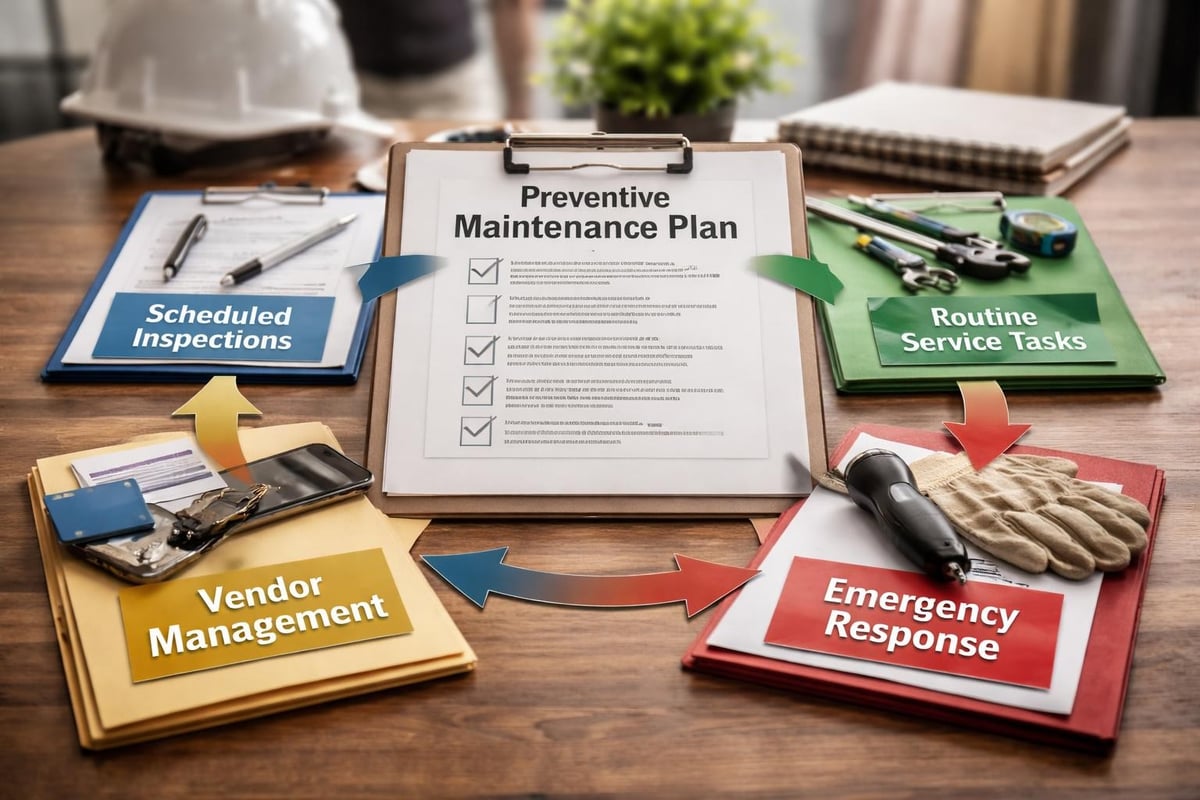
Preventive Maintenance Scheduling
Routine inspections identify problems before they escalate. Conduct semi-annual property walkthrough inspections, examining HVAC systems, plumbing fixtures, electrical components, roofing, and exterior elements. In New Orleans' humid climate, special attention to moisture issues, mold prevention, and weather-related damage proves essential.
Create maintenance calendars that schedule:
- HVAC filter changes (monthly or quarterly)
- HVAC system servicing (biannually)
- Gutter cleaning (seasonally)
- Smoke detector testing (quarterly)
- Pest control treatments (monthly or quarterly)
- Lawn care and landscaping (weekly or biweekly)
Emergency Response Protocols
Emergencies demand immediate attention regardless of the hour. Establish clear protocols for handling urgent situations like flooding, gas leaks, electrical failures, or security breaches. Maintain relationships with 24/7 emergency service providers who can respond quickly to protect both property and tenant safety.
Implementing effective management tips includes creating emergency contact lists, defining what constitutes an emergency versus a routine repair, and ensuring tenants understand proper reporting procedures.
Financial Management and Rent Collection
Consistent cash flow drives real estate investment success. Professional real estate rental management systems maximize collection rates while minimizing administrative burden.
Rent Collection Systems
Modern collection methods leverage technology for efficiency and accuracy. Online payment portals allow tenants to pay rent electronically through ACH transfers, credit cards, or debit cards. These systems automatically track payments, send reminders, and generate receipts without manual intervention.
Establish clear payment policies outlined in lease agreements:
- Due dates and grace periods
- Late fee amounts and assessment timing
- Acceptable payment methods
- Returned payment fees
- Partial payment policies
Enforcement consistency proves critical. Apply late fees uniformly according to lease terms, avoiding selective enforcement that could create fair housing violations or tenant relationship problems.
Budget Management and Financial Reporting
Property owners need clear financial visibility to make informed decisions. Comprehensive reporting should include:
| Report Type | Frequency | Key Information |
|---|---|---|
| Income Statement | Monthly | Rent collected, operating expenses, net income |
| Cash Flow Analysis | Monthly | Receipts, disbursements, account balances |
| Property Performance | Quarterly | Occupancy rates, maintenance costs, ROI |
| Year-End Summary | Annually | Tax documentation, capital improvements, depreciation |
Reserve fund management prepares properties for unexpected expenses. Industry standards recommend maintaining reserves equal to three to six months of operating expenses, covering everything from emergency repairs to vacancy periods.
Tenant Relations and Communication
Strong tenant relationships reduce turnover, minimize conflicts, and create positive living environments. Professional communication establishes expectations while building mutual respect between property managers and residents.
Communication Channels and Response Times
Establish multiple communication channels accommodating different tenant preferences. Options include phone calls, email, text messaging, tenant portals, and in-person office hours. Property management best practices emphasize responsive communication as essential for tenant satisfaction.
Set clear expectations for response times based on issue urgency. Emergency situations require immediate acknowledgment and rapid resolution, while routine maintenance requests might receive responses within 24 to 48 hours. Non-urgent administrative questions can be addressed within three to five business days.
Lease Enforcement and Violation Management
Consistent lease enforcement maintains property standards and protects all residents. When violations occur, document everything thoroughly and follow progressive discipline approaches:
- Verbal warning for minor first-time violations
- Written notice documenting the violation and required corrective action
- Formal cure or quit notice if violations continue
- Eviction proceedings as a last resort for serious or repeated violations
Balance firmness with fairness. Some situations warrant flexibility, particularly when tenants communicate proactively about temporary challenges. Others demand strict enforcement to protect property value and other residents' rights.

Legal Compliance and Risk Management
Real estate rental management requires navigating complex legal frameworks that vary by jurisdiction. Staying current with regulations protects property owners from costly litigation and penalties.
Fair Housing Requirements
Federal fair housing law prohibits discrimination throughout the rental process. Protected classes include race, color, religion, sex, national origin, familial status, and disability. State and local laws may expand protections to include sexual orientation, gender identity, source of income, or other characteristics.
Advertising practices must avoid discriminatory language or preferences. Words like "perfect for young professionals" or "ideal for mature adults" could suggest familial status discrimination. Focus instead on property features and amenities without referencing preferred tenant characteristics.
Reasonable accommodations require property managers to make exceptions to policies or physical modifications for disabled tenants when requests are reasonable and don't create undue financial or administrative burdens. Understanding legal considerations for property managers helps navigate these requirements appropriately.
Security Deposit Regulations
Louisiana law regulates security deposit handling with specific requirements for collection, holding, and return. Property managers must:
- Provide written receipts when collecting deposits
- Hold deposits in separate accounts or post surety bonds
- Conduct move-in and move-out inspections with documentation
- Return deposits within 30 days of lease termination
- Provide itemized deduction statements for withheld amounts
Failure to comply with security deposit laws can result in statutory penalties, often requiring return of the full deposit plus additional damages and attorney fees.
Technology Integration in Property Management
Modern real estate rental management increasingly relies on technology platforms that streamline operations, improve accuracy, and enhance tenant experiences.
Property Management Software Solutions
Comprehensive management software centralizes all property operations in single platforms. Features typically include:
- Tenant portals for online rent payment, maintenance requests, and document access
- Accounting modules tracking income, expenses, and generating financial reports
- Lease management storing documents, tracking renewals, and managing critical dates
- Maintenance coordination routing work orders, scheduling vendors, and tracking completion
- Marketing tools listing properties, screening applicants, and managing showings
These systems reduce manual administrative work while improving data accuracy and accessibility. For property managers overseeing multiple properties across Greater New Orleans, centralized platforms prove essential for maintaining operational efficiency.
Marketing and Tenant Acquisition Technology
Digital marketing reaches broader tenant pools more efficiently than traditional methods. Syndication services automatically distribute listings to major rental platforms like Zillow, Apartments.com, and Trulia from a single source. Professional photography, virtual tours, and detailed property descriptions attract qualified prospects while reducing unnecessary showing requests.
Online application processing accelerates tenant placement. Prospective renters submit applications digitally, authorize background and credit checks electronically, and receive screening results faster than paper-based systems allow. This efficiency reduces vacancy periods and improves applicant experiences.
Maximizing Property Performance and ROI
Strategic real estate rental management focuses on continuous improvement and value optimization. Property owners achieve higher returns through data-driven decision-making and proactive asset management.
Rental Rate Optimization
Market analysis ensures competitive pricing that maximizes income without creating extended vacancies. Regular rent surveys examining comparable properties provide baseline data for rate decisions. Consider factors including:
- Location and neighborhood characteristics
- Property size, age, and condition
- Amenity offerings and recent upgrades
- Seasonal demand fluctuations
- Local employment and economic trends
New Orleans market dynamics require understanding neighborhood-specific factors. Properties near major employers, universities, or entertainment districts command premium rents, while considerations like flood zones, school districts, and public transportation access influence tenant demand and pricing power.
Value-Add Improvement Strategies
Strategic upgrades increase property appeal and justify higher rents. Focus improvements on elements that deliver measurable returns:
| Improvement Type | Typical Cost | Potential ROI |
|---|---|---|
| Kitchen Updates | $5,000-$15,000 | 80-120% |
| Bathroom Renovations | $3,000-$10,000 | 70-100% |
| Energy Efficiency | $2,000-$8,000 | 60-90% |
| Curb Appeal | $1,000-$5,000 | 100-150% |
Prioritize improvements addressing deferred maintenance before cosmetic upgrades. Roof repairs, HVAC replacements, and plumbing updates protect property integrity while preventing more expensive emergency situations.
Scaling Your Real Estate Portfolio
Growing from single properties to larger portfolios requires systematic approaches and often professional management partnerships. Real estate rental management becomes increasingly complex as holdings expand across multiple properties or markets.
When to Consider Professional Management
Property owners should evaluate professional management when:
- Managing properties becomes too time-intensive for other responsibilities
- Distance from properties makes hands-on management impractical
- Portfolio growth exceeds personal management capacity
- Legal complexity or liability concerns increase
- Operational inefficiencies reduce profitability
Professional management services provide expertise, systems, and resources individual owners often cannot maintain cost-effectively. Experienced managers handle tenant issues, coordinate maintenance, ensure compliance, and optimize financial performance while owners focus on investment strategy.
Building Management Teams
Larger portfolios require dedicated teams with specialized roles. Leasing agents focus exclusively on marketing, showing properties, and tenant placement. Maintenance coordinators schedule repairs, manage vendors, and handle emergency responses. Property accountants process payments, track expenses, and generate financial reports.
Clear role definitions, documented procedures, and regular performance reviews keep teams aligned and accountable. Following industry best practices for team development creates scalable operations supporting continued portfolio growth.
Handling Difficult Situations and Problem Tenants
Even with thorough screening, challenging tenant situations occasionally arise. Professional real estate rental management requires conflict resolution skills and knowledge of proper legal procedures.
Late Payment Management
Address late payments immediately and consistently. When rent remains unpaid after grace periods expire:
- Send formal late payment notices documenting amounts owed
- Assess late fees according to lease terms
- Attempt personal contact to understand circumstances
- Offer payment plan options when appropriate
- Initiate eviction proceedings if necessary
Document all communications and payment attempts meticulously. These records prove essential if situations escalate to legal action.
Eviction Procedures
Eviction represents the last resort after other resolution attempts fail. Louisiana eviction law requires specific procedures and timeframes. Managers must:
- Provide proper written notice periods based on violation type
- File eviction suits in appropriate courts
- Attend hearings with complete documentation
- Execute judgments through proper legal channels
- Handle property abandonment according to statutory requirements
Understanding legal requirements prevents procedural errors that could invalidate eviction actions or create liability exposure. Many property owners partner with experienced attorneys for eviction proceedings to ensure compliance and protect their interests.
Regulatory Changes and Future Trends
Real estate rental management continues evolving with new technologies, changing regulations, and shifting tenant expectations. Staying ahead of trends positions property owners for continued success.
Emerging Technology Applications
Artificial intelligence and machine learning increasingly support management decisions. Predictive analytics identify maintenance needs before failures occur, optimize rental pricing based on real-time market data, and flag potential tenant issues through payment pattern analysis.
Smart home technology attracts tech-savvy tenants while reducing operating costs. Programmable thermostats, smart locks, water leak detectors, and automated lighting systems improve property appeal and efficiency.
Sustainability and Energy Efficiency
Environmental considerations influence both regulations and tenant preferences. Energy-efficient appliances, LED lighting, improved insulation, and water-saving fixtures reduce utility costs while appealing to environmentally conscious renters. Some jurisdictions now mandate energy efficiency disclosures or require minimum performance standards for rental properties.
Green building certifications can differentiate properties in competitive markets, though owners should carefully evaluate costs against potential rent premiums and reduced operating expenses.
Effective real estate rental management combines operational excellence, legal compliance, financial acumen, and strong tenant relationships to maximize property performance and owner returns. Property owners who implement systematic processes, leverage appropriate technology, and maintain consistent communication create sustainable competitive advantages in demanding rental markets. Whether you're managing your first investment property or overseeing an extensive portfolio, partnering with experienced professionals can transform property ownership from a burden into a truly passive income stream. Coxe Property Management and Leasing brings over 40 years of expertise managing properties throughout Greater New Orleans, handling every aspect of real estate rental management so owners can enjoy hassle-free returns on their investments.