

Owning rental property represents a significant financial investment and opportunity for wealth building. However, the day-to-day responsibilities of managing tenants, maintaining facilities, and navigating legal requirements can quickly overwhelm even experienced investors. A property manager for rental property serves as the critical link between ownership objectives and operational excellence, transforming potential headaches into streamlined processes. Whether you own a single-family home or multiple investment properties, understanding the value and function of professional property management can determine the difference between profitable passive income and constant stress.
Understanding the Role of a Property Manager for Rental Property
A property manager for rental property acts as the operational backbone of your investment, handling everything from tenant relations to financial reporting. These professionals take on the complex responsibilities that most property owners lack the time, expertise, or desire to manage personally.
Core responsibilities typically include:
- Marketing vacant units and attracting qualified tenants
- Conducting thorough tenant screening and background checks
- Collecting rent and managing payment systems
- Coordinating maintenance requests and emergency repairs
- Enforcing lease terms and handling violations
- Managing vendor relationships and service contracts
- Maintaining detailed financial records and providing owner reports
Professional property managers bring specialized knowledge of local and federal housing laws, ensuring your property remains compliant with regulations that change frequently. In the Greater New Orleans area, for example, understanding flood zone requirements, historic district restrictions, and local ordinance variations requires expertise that comes from years of experience.
Financial Oversight and Rent Collection
One of the most valuable services a property manager for rental property provides is consistent rent collection. Late payments and non-payment represent the primary financial risk for landlords, and professional managers implement systems that minimize these issues.
Rent collection processes include establishing clear payment expectations, utilizing multiple payment methods for tenant convenience, and enforcing late fees according to lease agreements. When payment issues arise, experienced property managers know how to navigate the eviction process efficiently while maintaining compliance with legal requirements.
Beyond collection, financial management encompasses budget creation, expense tracking, and providing owners with transparent reporting. Zillow’s comprehensive guide offers additional insights into rental management best practices that professional managers implement daily.

Key Benefits of Hiring Professional Property Management
Property ownership should generate income without consuming all your available time. Professional management delivers measurable advantages that directly impact your bottom line and quality of life.
| Benefit Category | Specific Advantages | Impact on Owners |
|---|---|---|
| Time Savings | No tenant calls, no emergency response, no showing properties | Reclaim 15-20 hours monthly |
| Tenant Quality | Professional screening, credit checks, employment verification | Reduced turnover, fewer payment issues |
| Legal Protection | Compliance expertise, proper documentation, eviction handling | Minimized liability exposure |
| Maintenance Efficiency | Vendor networks, preventive care, faster repairs | Lower long-term costs, preserved property value |
The Institute of Real Estate Management provides extensive resources on industry standards, emphasizing how professional management protects asset value over time.
Tenant Screening and Placement Excellence
Finding the right tenants represents perhaps the most critical function a property manager for rental property performs. Poor tenant selection leads to payment problems, property damage, and costly evictions that can devastate investment returns.
Professional screening processes examine multiple data points:
- Credit history analysis to identify payment patterns and financial responsibility
- Employment verification confirming income stability and job tenure
- Rental history review including landlord references and prior eviction records
- Criminal background checks ensuring property and neighborhood safety
- Income-to-rent ratio verification typically requiring income at least three times monthly rent
Companies like Coxe Property Management and Leasing utilize comprehensive screening protocols developed over decades of experience, ensuring that only qualified tenants occupy your property.
Property Maintenance and Value Preservation
Deferred maintenance represents one of the fastest ways to destroy property value and tenant satisfaction. A property manager for rental property implements systematic maintenance programs that protect your investment while keeping tenants happy.
Preventive Maintenance Programs
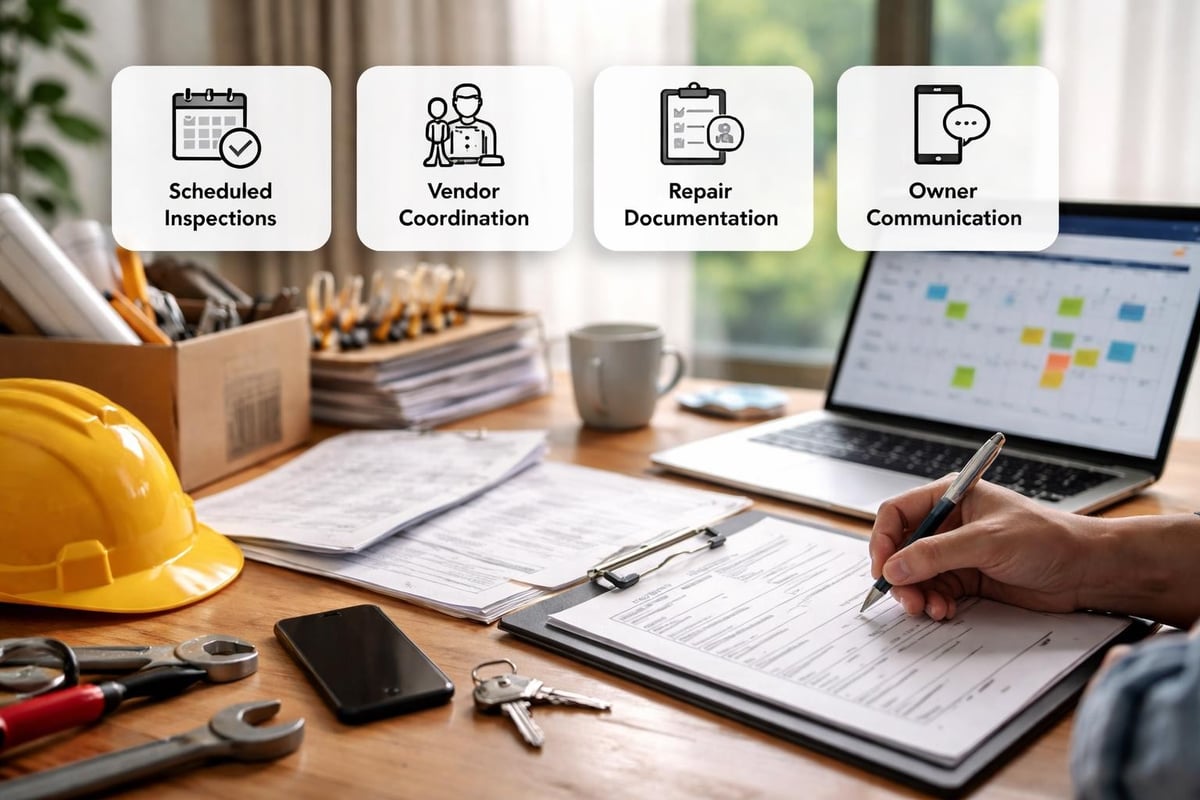
Rather than waiting for systems to fail, professional managers schedule regular inspections and preventive service:
- HVAC system servicing every six months to prevent costly breakdowns
- Plumbing inspections identifying leaks before they cause major damage
- Roof assessments catching minor issues before they require full replacement
- Exterior maintenance including painting, landscaping, and drainage systems
- Safety equipment testing for smoke detectors, carbon monoxide alarms, and fire extinguishers
This proactive approach costs significantly less than emergency repairs while extending the useful life of major property systems. Property maintenance services provided by experienced companies include established vendor relationships that deliver quality work at competitive prices.
Emergency Response Capabilities
Maintenance emergencies don't respect business hours or personal schedules. Professional property managers maintain 24/7 response systems for urgent issues like flooding, heating failures, or security concerns. This immediate availability protects both property value and tenant safety while relieving owners from middle-of-the-night crisis calls.
Legal Compliance and Risk Management
The legal landscape surrounding rental properties grows more complex each year. Fair housing laws, security deposit regulations, eviction procedures, and habitability standards create numerous opportunities for costly mistakes. A property manager for rental property serves as your first line of defense against legal exposure.
Federal, state, and local regulations govern virtually every aspect of rental operations. The Fair Housing Act prohibits discrimination based on race, color, religion, sex, national origin, familial status, or disability. State laws dictate security deposit limits, interest requirements, and return timelines. Local ordinances may impose rental registration requirements, occupancy limits, and specific maintenance standards.
Critical compliance areas include:
- Proper lease agreement structure incorporating required disclosures
- Security deposit handling according to state regulations
- Move-in and move-out inspection documentation
- Lead-based paint disclosures for properties built before 1978
- Reasonable accommodation procedures for disabled tenants
- Proper notice requirements for entry, rent increases, and lease terminations
The National Association of Residential Property Managers provides continuing education ensuring members stay current with regulatory changes. Their guide on why hire a property manager details how professional management reduces legal risks.
Selecting the Right Property Manager for Rental Property
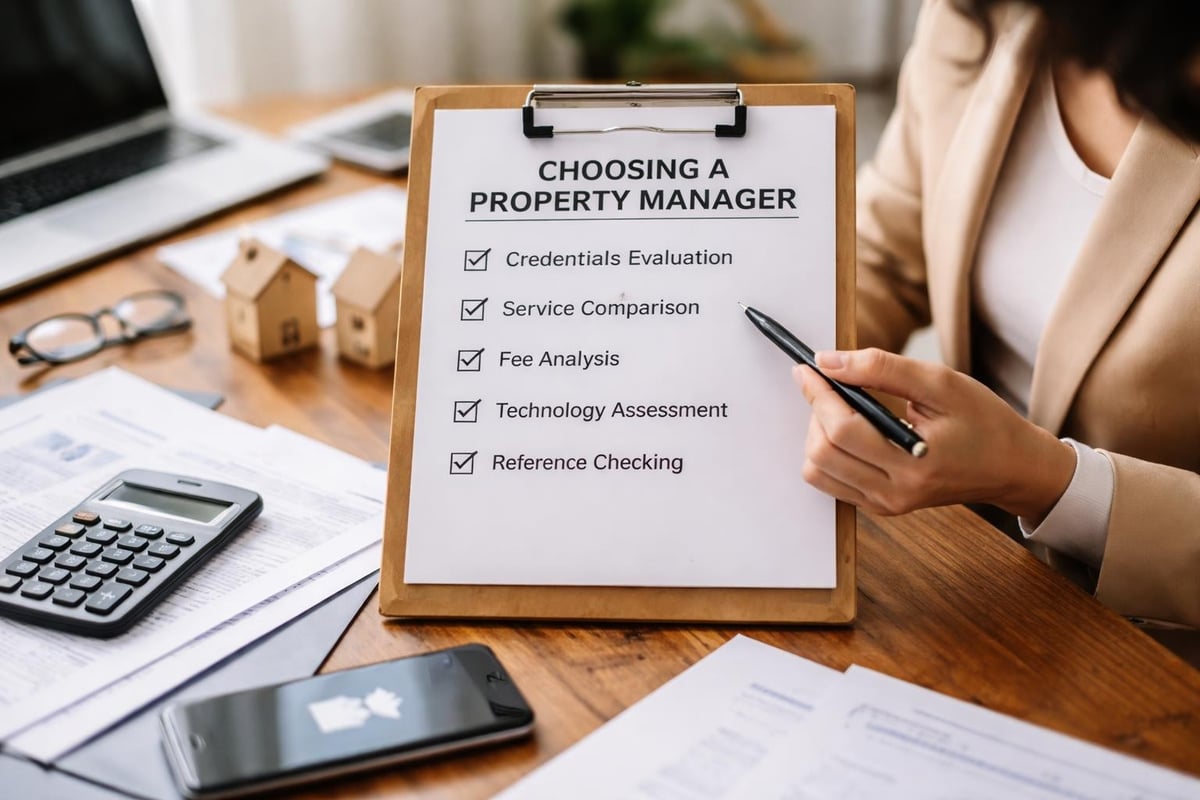
Not all property management companies deliver equal value or service quality. Making an informed selection requires careful evaluation of credentials, experience, and operational systems.
Essential Qualifications and Credentials
Professional property managers often hold industry certifications demonstrating their commitment to excellence. The Certified Property Manager (CPM) designation from IREM and the Residential Management Professional (RMP) credential from NARPM represent the industry's most respected certifications.
Beyond credentials, evaluate:
- Years of experience in your local market understanding regional quirks and regulations
- Portfolio size and property types matching your investment category
- Owner-to-manager ratios ensuring adequate attention to your properties
- Technology platforms for transparent communication and reporting
- References from current clients providing honest feedback about service quality
The Better Business Bureau offers valuable resources for researching property management companies, including complaint histories and resolution patterns.
Fee Structures and Value Assessment
Property management fees typically range from 8% to 12% of monthly rent, though structures vary considerably. Understanding what services each fee covers helps you compare value rather than just price.
| Fee Type | Typical Range | Services Covered |
|---|---|---|
| Monthly Management | 8-12% of rent | Ongoing operations, rent collection, tenant communication |
| Leasing/Placement | 50-100% of first month rent | Marketing, showing, screening, lease preparation |
| Maintenance Markup | 10-20% of repair costs | Coordination, quality control, vendor management |
| Lease Renewal | $100-$300 flat fee | Renewal negotiation, lease preparation, documentation |
Companies managing substantial portfolios, like those overseeing nearly $1 billion in assets, often provide better value through established vendor relationships and operational efficiencies that reduce overall costs despite potentially higher management percentages.
Technology and Communication in Modern Property Management
The property management industry has evolved dramatically through technology adoption, transforming how managers communicate with owners and tenants while streamlining operational efficiency.
Digital Platforms and Owner Portals
Modern property managers for rental properties provide owners with 24/7 access to critical information through online portals. These systems display:
- Real-time financial data including income, expenses, and net operating income
- Maintenance request tracking from submission through completion
- Lease documentation and tenant communication histories
- Payment processing records showing rent collection and owner disbursements
- Property performance metrics comparing your investment to market benchmarks
This transparency builds trust while giving owners the information needed for tax preparation, refinancing decisions, and portfolio planning. Renting solutions increasingly incorporate sophisticated technology that improves both operational efficiency and owner satisfaction.
Tenant Communication Systems
Professional property managers implement multiple communication channels ensuring tenants can easily report issues, make payments, and receive important notices. Online renter portals allow tenants to submit maintenance requests with photos, schedule move-out inspections, and access lease documents at their convenience.
This accessibility improves tenant satisfaction while creating documentation trails that protect owners during disputes. Automated rent reminders reduce late payments, while digital lease signing eliminates scheduling challenges and paper waste.
Market Expertise and Rental Optimization
A property manager for rental property brings deep market knowledge that directly impacts your rental income and vacancy rates. Understanding comparable properties, seasonal trends, and neighborhood dynamics allows managers to optimize pricing strategies.
Market expertise includes:
- Analyzing comparable properties to establish competitive rental rates
- Timing rent increases to maximize income without triggering turnover
- Identifying property improvements that justify higher rents
- Understanding seasonal demand patterns affecting vacancy duration
- Recognizing neighborhood changes impacting property values
In markets like Greater New Orleans, local expertise becomes even more critical. Understanding New Orleans property management nuances, including neighborhood-specific demand drivers, seasonal tourism impacts, and recovering market areas, requires years of focused experience that generalist managers cannot replicate.
Reducing Vacancy Periods
Every day a property sits vacant costs you money. Professional property managers minimize vacancy through aggressive marketing, efficient turnover processes, and strategic pricing. The American Apartment Owners Association guide emphasizes that reducing average vacancy from 30 days to 15 days can increase annual returns by several percentage points.
Experienced managers begin marketing before current tenants vacate, schedule showings efficiently, and have pre-qualified applicants ready to move in immediately after turnover is complete. This efficiency represents value that far exceeds management fees for most investment properties.
Long-Term Relationship Building
The relationship between property owners and their property manager for rental property should extend beyond transactional interactions. The most successful partnerships involve regular communication, aligned expectations, and mutual respect.
Performance Metrics and Accountability
Professional property managers provide regular reporting on key performance indicators:
- Occupancy rates compared to market averages and historical performance
- Rent collection percentages tracking on-time payments and delinquencies
- Maintenance response times measuring efficiency in addressing tenant needs
- Tenant retention rates indicating satisfaction and reducing turnover costs
- Net operating income trends showing financial performance over time
These metrics create accountability while helping owners make informed decisions about property improvements, refinancing timing, and portfolio expansion. When considering expert property leasing services, understanding how managers measure and report performance becomes a critical selection criterion.
Scaling Your Investment Portfolio
As your investment portfolio grows, the value of professional property management increases exponentially. Managing one property may be feasible for hands-on owners, but scaling to multiple properties without professional help creates overwhelming complexity.
Property managers provide standardized systems applicable across your entire portfolio, from lease templates to maintenance protocols. This consistency improves efficiency while ensuring all properties receive equal attention and professional care. Companies with deep experience managing substantial portfolios understand the unique challenges of multi-property ownership and implement systems that scale effectively.
Regional Considerations for Property Management
Location significantly impacts property management requirements and strategies. A property manager for rental property must understand local market conditions, regulatory environments, and operational challenges specific to their region.
In the Greater New Orleans area, unique factors influence property management:
- Hurricane preparedness requiring specific property preparations and insurance knowledge
- Historic property regulations governing renovations and exterior modifications in certain districts
- Tourism-driven demand fluctuations affecting both long-term and short-term rental markets
- Flood zone requirements impacting insurance costs and tenant disclosures
- Local contractor availability and pricing following major weather events
These regional considerations make local expertise invaluable. Property managers with decades of experience in specific markets understand nuances that national companies simply cannot match. Comprehensive property management services tailored to regional needs deliver superior results compared to generic approaches.
Hiring a property manager for rental property transforms real estate investment from an active, time-consuming responsibility into genuine passive income. Professional management protects your investment value, maximizes returns, and eliminates the daily headaches that drive many investors to sell prematurely. With over 40 years of experience managing properties throughout the Greater New Orleans area, Coxe Property Management and Leasing provides the expertise, technology, and personalized service that serious property owners demand. Discover how professional property management can enhance your investment performance and restore your free time.