

Managing rental properties requires a delicate balance of business acumen, legal knowledge, and interpersonal skills. Whether you own a single-family home or multiple properties, effective property management for landlords involves mastering numerous responsibilities that directly impact your investment returns and tenant satisfaction. From screening qualified tenants to handling maintenance requests and ensuring regulatory compliance, landlords face complex challenges that require systematic approaches and proven strategies. Understanding these core competencies separates successful property owners from those who struggle with vacancies, legal issues, and diminishing returns.
Understanding the Scope of Property Management Responsibilities
Property management for landlords extends far beyond collecting rent checks and responding to tenant complaints. The role encompasses a comprehensive suite of duties that protect your investment while maintaining positive tenant relationships.
Daily operational tasks include:
- Processing rent payments and tracking delinquencies
- Responding to maintenance requests and emergencies
- Conducting property inspections and documenting conditions
- Managing vendor relationships and service contracts
- Maintaining accurate financial records and documentation
Landlords must also navigate strategic planning, including setting competitive rental rates, budgeting for capital improvements, and developing long-term property enhancement plans. Market conditions in regions like Greater New Orleans demand constant attention to rental trends, occupancy rates, and evolving tenant expectations.
Financial Management and Recordkeeping
Effective financial oversight forms the foundation of successful property management for landlords. Maintaining accurate financial records protects your business interests and simplifies tax preparation.
Establishing dedicated accounting systems separates personal and business finances while providing clear visibility into property performance. Track every transaction, from rental income and security deposits to repair expenses and property taxes. Digital tools streamline this process, but the fundamental discipline of regular reconciliation remains essential.
| Financial Metric | Tracking Frequency | Purpose |
|---|---|---|
| Rental Income | Monthly | Cash flow management |
| Operating Expenses | Monthly | Budget adherence |
| Vacancy Rates | Quarterly | Market positioning |
| Return on Investment | Annually | Portfolio performance |
Cash flow forecasting helps anticipate periods when expenses may exceed income, allowing proactive reserve management. Setting aside 10-15% of monthly rental income for unexpected repairs and maintenance creates a financial buffer against costly surprises.

Tenant Screening and Selection Best Practices
The tenant selection process represents one of the most critical responsibilities in property management for landlords. Quality tenants pay rent consistently, maintain properties responsibly, and minimize turnover costs.
Comprehensive screening begins with detailed rental applications that request employment history, previous addresses, and references. Following best practices for tenant screening includes verifying employment status, analyzing credit reports, and conducting criminal background checks where legally permitted.
Creating Fair and Effective Screening Criteria
Establishing objective screening criteria protects landlords from discrimination claims while ensuring consistent evaluation standards. Define minimum credit scores, income requirements (typically three times monthly rent), and rental history expectations before reviewing applications.
Essential verification steps include:
- Employment verification through pay stubs and employer contacts
- Credit report analysis for payment history patterns
- Previous landlord references for rental performance
- Criminal background checks following local regulations
- Income documentation including tax returns for self-employed applicants
Document every decision and maintain consistent application of criteria across all prospective tenants. This systematic approach reduces legal liability while improving tenant quality. Many successful landlords develop procedures for recurring tasks to ensure nothing falls through the cracks during busy periods.
Marketing Properties Effectively
Attracting quality tenant candidates requires strategic marketing across multiple channels. Professional photography showcases properties in their best light, while detailed descriptions highlight unique features and amenities.
List properties on major rental platforms, local classifieds, and social media networks to maximize exposure. Virtual tours have become increasingly important, allowing prospective tenants to preview properties remotely before scheduling in-person visits. Price properties competitively based on comparable rentals in your market while factoring in unique value propositions like recent renovations or included utilities.
Maintenance and Property Preservation
Proactive maintenance protects property values while minimizing costly emergency repairs. Property management for landlords demands systematic approaches to both routine upkeep and unexpected issues.
Develop preventive maintenance schedules addressing HVAC systems, plumbing, electrical components, and structural elements. Seasonal inspections identify potential problems before they escalate into major repairs. For instance, checking roof conditions before hurricane season in coastal areas like Greater New Orleans prevents water damage from severe weather events.
Building Reliable Vendor Networks
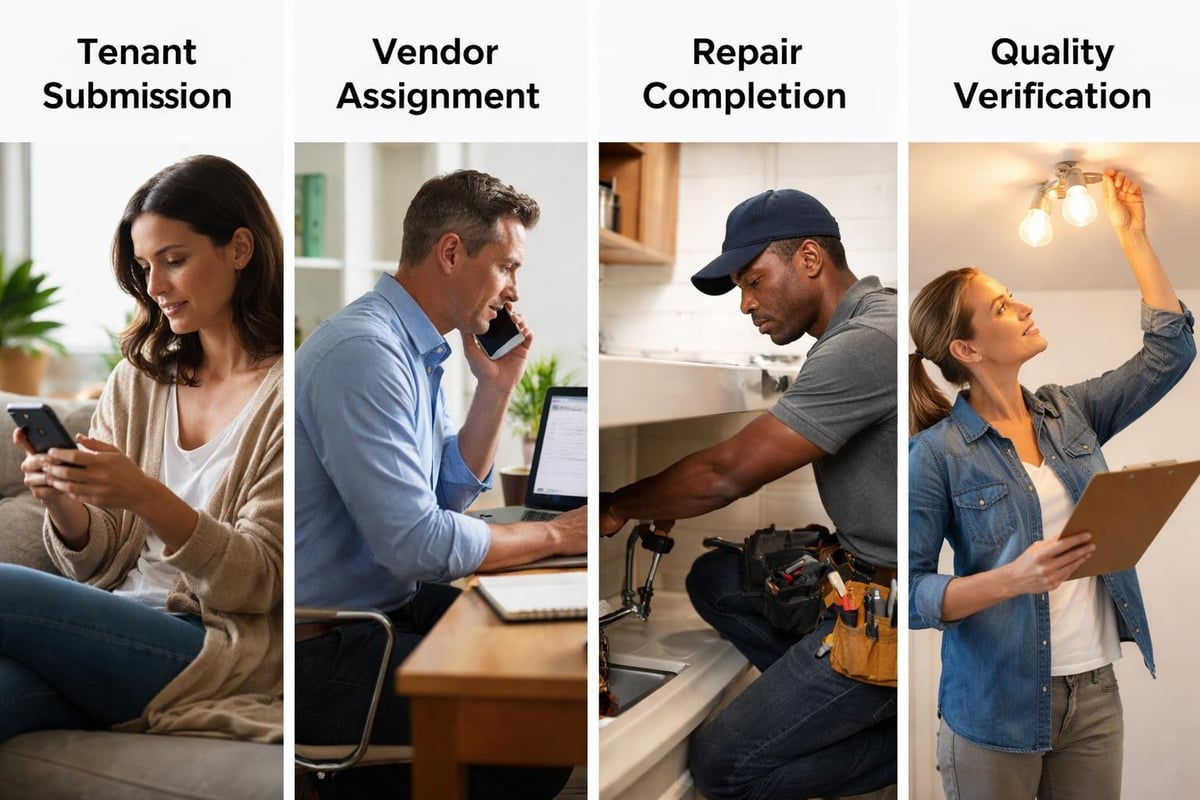
Establishing relationships with qualified contractors, plumbers, electricians, and other service providers ensures rapid response when issues arise. Vet vendors thoroughly, verifying licenses, insurance coverage, and references before adding them to your preferred provider list.
Negotiate favorable rates for routine services while maintaining emergency contacts for after-hours situations. Some landlords create tiered response protocols, addressing urgent issues like water leaks within hours while scheduling non-critical repairs during standard business hours.
| Maintenance Type | Response Time | Priority Level |
|---|---|---|
| Emergency (flooding, no heat) | Within 2-4 hours | Critical |
| Urgent (appliance failure) | Within 24-48 hours | High |
| Routine (cosmetic issues) | Within 1-2 weeks | Medium |
| Preventive (scheduled service) | As planned | Ongoing |
Legal Compliance and Risk Management
Navigating the complex regulatory landscape represents a significant challenge in property management for landlords. Federal, state, and local laws govern everything from fair housing practices to security deposit handling and eviction procedures.
Fair Housing Act compliance prohibits discrimination based on race, color, religion, sex, national origin, familial status, or disability. Train yourself and any staff on protected classes and acceptable screening criteria. Document all interactions and decisions to demonstrate compliance if questions arise.
Understanding Regional Regulatory Requirements
Property management regulations vary significantly by location. Landlords operating in different markets must understand jurisdiction-specific requirements. While this article focuses on best practices applicable broadly, landlords should research their specific market thoroughly.
Security deposit regulations typically specify maximum amounts, required disclosures, holding requirements, and return timelines. Some jurisdictions mandate interest payments on deposits held beyond certain periods. Maintain separate accounts for security deposits, never commingling these funds with operating capital.
Key compliance areas include:
- Habitability standards and required amenities
- Lead-based paint disclosure for pre-1978 properties
- Smoke detector and carbon monoxide alarm requirements
- Entry notice requirements for landlord property access
- Rent increase limitations and notification periods
Legal considerations for property managers extend to proper lease documentation, understanding local rent control ordinances, and following prescribed eviction procedures when necessary.
Insurance and Liability Protection
Adequate insurance coverage protects against catastrophic losses and liability claims. Landlord policies differ from standard homeowner insurance, covering rental property-specific risks including loss of rental income, tenant-caused damage, and liability for injuries on the property.
Require tenants to maintain renter's insurance, protecting their personal belongings while providing additional liability coverage. Include this requirement in lease agreements and verify coverage periodically throughout the tenancy.
Rent Collection and Financial Optimization
Consistent rent collection directly impacts investment returns, making this function central to property management for landlords. Establishing clear payment expectations and convenient payment methods improves collection rates while reducing administrative burden.
Modern renter portals streamline the payment process, allowing tenants to submit payments electronically while providing automatic receipt documentation. Automated reminders reduce late payments, while online access to payment history helps tenants track their obligations.
Setting and Adjusting Rental Rates
Competitive rental pricing balances maximizing income against minimizing vacancy periods. Research comparable properties regularly, analyzing amenities, location advantages, and current market conditions.
Annual market reviews determine appropriate rent adjustments for lease renewals. Gradual increases with proper notice maintain tenant relationships while keeping pace with market rates and inflation. Sudden large increases often trigger turnover, resulting in vacancy costs that exceed the additional revenue gained.
Calculate the true cost of vacancy, including lost rent, turnover expenses, marketing costs, and potential repairs between tenants. Sometimes maintaining stable, quality tenants at slightly below-market rates proves more profitable than frequent turnover pursuing maximum rental income.

Property Inspections and Documentation
Regular property inspections protect both landlord interests and tenant safety. Schedule move-in, periodic, and move-out inspections as standard practice, documenting conditions thoroughly with photographs and detailed notes.
Move-in inspections establish baseline property conditions, protecting landlords from liability for pre-existing damage. Conduct walkthroughs with tenants present, reviewing the inspection report together and obtaining signatures acknowledging accuracy.
Effective inspection protocols include:
- Creating room-by-room checklists covering all major components
- Photographing or videoing every area and notable features
- Testing all appliances, fixtures, and systems
- Noting both damages and normal wear items
- Providing copies to all parties with dated signatures
Periodic inspections during tenancy identify maintenance needs and lease compliance issues. Most jurisdictions permit quarterly or semi-annual inspections with proper notice, typically 24-48 hours. Use these opportunities to check smoke detectors, identify unreported maintenance needs, and ensure lease term compliance.
Communication and Tenant Relations
Strong tenant relationships reduce turnover, minimize conflicts, and create positive rental experiences that generate referrals. Property management for landlords succeeds when clear communication channels exist and expectations are mutually understood.
Establish preferred communication methods and response timeframes at lease signing. Some landlords use email for non-urgent matters while maintaining phone availability for emergencies. Setting boundaries prevents burnout while ensuring tenants can reach you when necessary.
Handling Conflicts and Complaints
Address tenant concerns promptly and professionally, even when you cannot immediately resolve issues. Acknowledgment and transparency about resolution timelines demonstrate respect and commitment to tenant satisfaction.
Document all communications regarding complaints, repairs, or disputes. Written records protect both parties if disagreements escalate, providing clear evidence of actions taken and agreements reached.
When conflicts arise, focus on solutions rather than blame. Understanding tenant perspectives often reveals simple resolutions that preserve relationships while addressing legitimate concerns. Managing rental properties effectively requires balancing firmness about lease terms with flexibility in finding mutually beneficial solutions.
Technology and Automation Solutions
Modern property management for landlords leverages technology to automate routine tasks, improve accuracy, and enhance tenant experiences. Digital tools range from accounting software and tenant screening services to maintenance request platforms and electronic lease signing.
Property management software centralizes operations, tracking rent payments, maintenance requests, lease terms, and financial reporting in unified systems. Cloud-based platforms provide access from anywhere, essential for landlords managing properties remotely or overseeing multiple units.
Technology benefits include:
- Automated rent reminders and late payment notices
- Digital maintenance request submission and tracking
- Electronic document storage and retrieval
- Financial reporting and tax preparation support
- Tenant screening and background check integration
Evaluate software options based on portfolio size, budget, and specific needs. Some platforms cater to individual landlords with single properties, while others serve professional property managers overseeing hundreds of units. Free trials allow testing functionality before committing to subscriptions.
When to Consider Professional Property Management
Self-management works well for some landlords, particularly those with limited portfolios, local properties, and available time. However, professional property management services offer distinct advantages as portfolios grow or circumstances change.
Expert property management provides specialized knowledge, established vendor networks, and systems honed through years of experience. Professional managers handle tenant screening, rent collection, maintenance coordination, and legal compliance, freeing landlords from daily operational demands.
Consider professional management when:
- Managing properties from a distance
- Owning multiple properties requiring significant time investment
- Lacking expertise in specific areas like legal compliance
- Preferring passive investment approaches
- Experiencing difficulty with problem tenants or maintenance issues
Professional property managers typically charge 8-12% of monthly rental income, though rates vary by location, property type, and services included. Compare this cost against the value of your time, stress reduction, and potential improvements in occupancy rates and tenant quality.
Building Long-Term Investment Success
Successful property management for landlords focuses on sustainable practices that preserve property values while generating consistent returns. This long-term perspective influences decisions about tenant selection, maintenance investments, and property improvements.
Capital improvement planning allocates funds for major systems replacement before failures occur. Setting aside reserves for roof replacement, HVAC updates, and other significant expenses prevents financial strain when these inevitable costs arise. Properties maintained to high standards command premium rents and attract quality tenants who treat properties respectfully.
Portfolio diversification across property types or locations reduces risk concentration. While specialization builds expertise, over-reliance on single markets or property categories creates vulnerability to localized economic downturns or regulatory changes.
Market knowledge keeps landlords competitive and informed about emerging trends. Attend local real estate investor meetings, follow market reports, and network with other property owners to stay current on rental rates, tenant expectations, and regulatory developments affecting your market.
Effective property management for landlords combines systematic processes, legal compliance, financial discipline, and strong tenant relationships. Whether you choose self-management or professional services, understanding these core principles improves investment performance and reduces operational stress. For property owners in the Greater New Orleans area seeking comprehensive management solutions backed by over 40 years of experience, Coxe Property Management and Leasing provides personalized services that ensure hassle-free ownership while protecting your valuable assets.