

The role of a real estate leasing agent has evolved significantly over the past decade, transforming from simple property showings to comprehensive tenant relationship management. These professionals serve as the critical connection between property owners and potential tenants, ensuring properties remain occupied while maintaining quality tenant relationships. In markets like Greater New Orleans and beyond, skilled leasing agents contribute directly to property value preservation and revenue optimization through strategic tenant placement and retention.
Understanding the Real Estate Leasing Agent Role
A real estate leasing agent specializes in marketing rental properties, screening prospective tenants, and facilitating lease agreements. Unlike sales agents who focus on property transactions, leasing agents concentrate exclusively on rental properties, developing expertise in tenant relations, lease terms, and rental market dynamics.
Core Responsibilities and Daily Functions
The daily activities of a real estate leasing agent extend far beyond property tours. These professionals manage multiple responsibilities simultaneously:
- Conducting property showings and virtual tours for prospective tenants
- Screening applications through background checks, credit reports, and employment verification
- Negotiating lease terms and rental rates within market parameters
- Processing lease documentation and ensuring legal compliance
- Coordinating move-in inspections and key exchanges
- Managing renewal negotiations with existing tenants
Market research forms a critical component of effective leasing. Agents must continuously monitor rental rates, vacancy trends, and competitor offerings to position properties competitively. This knowledge enables them to provide valuable guidance to property owners regarding pricing strategies and property improvements that attract quality tenants.

Distinguishing Leasing Agents from Property Managers
While both roles operate within the rental property sector, key distinctions exist. A real estate leasing agent primarily focuses on tenant acquisition and lease execution. Property managers, conversely, oversee the ongoing operational aspects including maintenance coordination, rent collection, and tenant issue resolution.
Many professionals begin as leasing agents before advancing to comprehensive property management services that encompass broader responsibilities. Understanding this career progression helps professionals plan their development trajectory and skill acquisition priorities.
Essential Skills for Success in Leasing
Success as a real estate leasing agent requires a diverse skill set combining interpersonal abilities with technical knowledge. The most effective agents cultivate these competencies continuously throughout their careers.
Communication and Relationship Building
Exceptional communication skills distinguish top-performing leasing agents from average ones. These professionals must articulate property features persuasively, explain lease terms clearly, and navigate difficult conversations regarding application denials or lease violations. Active listening enables agents to understand tenant needs and match them with appropriate properties.
Building rapport quickly creates trust with prospective tenants. This relationship-building capacity influences application conversion rates and tenant satisfaction levels throughout the lease term. Agents who invest in relationship development often benefit from referrals and positive online reviews that enhance their professional reputation.
Technical and Market Knowledge
| Skill Category | Specific Competencies | Application |
|---|---|---|
| Legal Knowledge | Fair Housing laws, lease regulations, eviction procedures | Ensuring compliance and avoiding liability |
| Market Analysis | Rental rate trends, occupancy statistics, demographic shifts | Setting competitive pricing and marketing strategies |
| Technology Proficiency | Property management software, virtual tour platforms, CRM systems | Streamlining operations and enhancing efficiency |
| Financial Literacy | Rent calculations, security deposit regulations, fee structures | Accurate lease preparation and financial reporting |
The leasing agent role demands continuous learning as regulations, technology, and market conditions evolve. Successful agents dedicate time to professional development through courses, industry publications, and peer networking.
Sales and Negotiation Abilities
Leasing agents function fundamentally as sales professionals. Converting property inquiries into signed leases requires persuasive presentation skills and objection handling capabilities. Understanding tenant motivations allows agents to emphasize property features that resonate most strongly with specific demographics.
Negotiation expertise proves valuable when balancing property owner objectives with tenant expectations. Skilled agents find creative solutions that satisfy both parties, such as flexible lease start dates or minor property modifications that secure desirable tenants without compromising owner interests.
Career Development and Advancement Opportunities
The leasing profession offers multiple pathways for career growth, with opportunities scaling from entry-level positions to senior leadership roles within property management organizations.
Entry Requirements and Licensing
Most states require real estate leasing agents to hold a valid real estate license, though specific requirements vary by jurisdiction. The licensing process typically involves:
- Completing pre-licensing education (60-180 hours depending on state)
- Passing a state licensing examination
- Submitting fingerprints and background check documentation
- Paying applicable licensing fees
- Maintaining continuing education requirements for renewal
Louisiana, for instance, requires aspiring agents to complete specific coursework and pass both state and national portions of the licensing exam. Prospective leasing professionals should verify requirements with their state's real estate commission before beginning the licensing process.
Compensation Structure and Earning Potential
Real estate leasing agents typically earn income through multiple compensation mechanisms:
- Base salary ranging from $30,000 to $45,000 annually in most markets
- Commission percentages of 50-100% of one month's rent per signed lease
- Renewal bonuses for retaining existing tenants
- Performance incentives tied to occupancy rates or portfolio goals
Top performers in high-demand markets can earn $60,000 to $80,000 or more annually when combining base pay with commission earnings. Experience level, portfolio size, and geographic market significantly influence earning potential. Agents working with larger property management firms often access more lucrative compensation packages due to larger property portfolios.
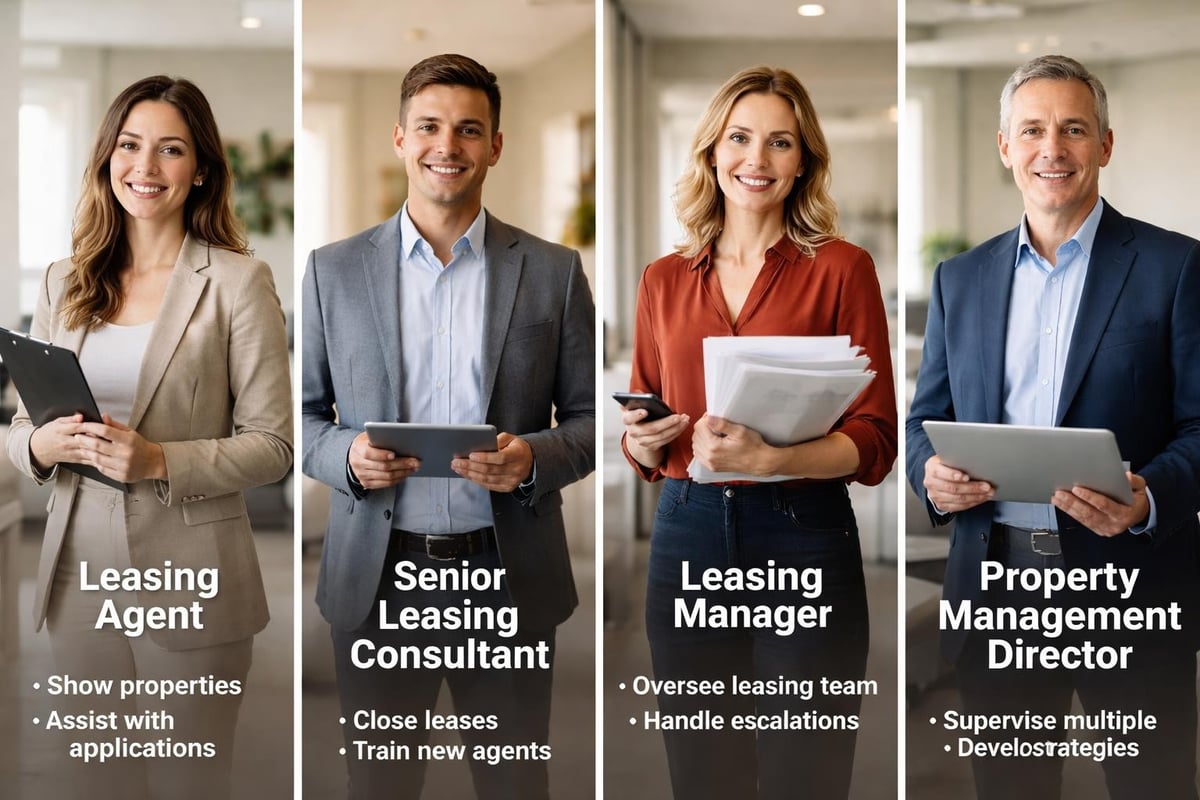
Professional Growth Trajectories
Career advancement opportunities for real estate leasing agents include:
Senior Leasing Consultant positions overseeing multiple properties or mentoring junior agents. These roles typically require 3-5 years of successful leasing experience and demonstrated leadership capabilities.
Leasing Manager roles coordinating entire leasing teams and establishing departmental strategies. Managers assume responsibility for occupancy targets across property portfolios and agent performance development.
Property Management transitions leveraging leasing expertise to manage comprehensive property operations. Many successful property managers began as leasing agents, using that foundation to understand tenant acquisition before expanding into operational management.
Strategic Impact on Property Performance
A skilled real estate leasing agent directly influences property financial performance and long-term value. Understanding this strategic impact helps property owners appreciate the value these professionals deliver.
Minimizing Vacancy Costs
Vacancy represents the most significant revenue threat for rental properties. Each day a unit remains unoccupied costs property owners rental income that cannot be recovered. Effective leasing agents minimize vacancy through:
- Proactive marketing before current leases expire
- Maintaining robust prospect pipelines
- Expediting application processing and lease execution
- Creating urgency through professional presentation and follow-up
Properties managed by experienced leasing agents typically achieve occupancy rates 5-10 percentage points higher than those relying on owner self-management. This difference translates to substantial annual revenue increases across multi-unit properties.
Quality Tenant Selection
Beyond simply filling vacancies, strategic tenant selection protects property condition and reduces future management complications. A real estate leasing agent serves as the first quality control checkpoint, evaluating applicants against established criteria.
| Screening Component | Quality Indicators | Risk Mitigation |
|---|---|---|
| Credit History | Score above 650, limited collections, reasonable debt-to-income ratio | Reduces non-payment risk |
| Rental History | Positive landlord references, no evictions, stable residency patterns | Predicts lease compliance |
| Employment Verification | Income 3x monthly rent, stable employment, verified employer contact | Ensures payment capacity |
| Background Check | Clean criminal record, no violence or property crime history | Protects property and other tenants |
The cost difference between quality and problematic tenants extends beyond rent collection. Poor tenant selection can result in property damage, legal expenses, neighbor complaints, and ultimately property value degradation. Skilled agents recognize red flags during screening and make principled decisions that protect owner interests.

Technology Integration in Modern Leasing
Technology has fundamentally transformed how real estate leasing agents operate, creating efficiency gains while enhancing prospect experiences. Successful agents embrace these tools while maintaining the personal touch that builds relationships.
Digital Marketing and Lead Generation
Modern leasing agents leverage multiple digital channels to attract prospective tenants:
Property listing platforms like Zillow, Apartments.com, and Trulia extend property visibility beyond traditional advertising methods. Optimizing listings with professional photography, detailed descriptions, and accurate amenity information maximizes inquiry generation.
Social media marketing creates community awareness and showcases property lifestyle aspects. Instagram tours, Facebook community groups, and targeted advertising reach demographic segments most likely to convert into qualified applicants.
Virtual tour technology enables remote property viewing, particularly valuable for relocating tenants or those conducting preliminary property research. Three-dimensional walkthroughs and video tours reduce unnecessary showings while maintaining prospect engagement.
Property Management Software
Comprehensive platforms streamline administrative functions that previously consumed significant agent time. These systems typically integrate:
- Application processing and screening automation
- Lease generation with customizable templates
- Digital signature capabilities for remote execution
- Prospect communication tracking and follow-up reminders
- Reporting dashboards showing pipeline metrics and conversion rates
Technology adoption allows real estate leasing agents to manage larger property portfolios without proportional time increases. The efficiency gains translate to better service quality and improved owner returns.
Building a Successful Leasing Practice
Whether operating independently or within established property management organizations, certain practices distinguish exceptional leasing agents from mediocre performers.
Professional Development Priorities
Continuous skill enhancement separates career leasing professionals from those treating the role as temporary employment. Priority development areas include:
- Regulatory knowledge updates ensuring compliance with evolving Fair Housing requirements and local ordinances
- Market expertise expansion through neighborhood research, competitor analysis, and demographic trend monitoring
- Communication skill refinement via sales training, conflict resolution courses, and presentation workshops
- Technology proficiency advancement learning new platforms and digital marketing techniques
Professional associations like the National Apartment Association offer specialized training programs, certifications, and networking opportunities that accelerate career growth.
Client Service Excellence
Property owners entrust real estate leasing agents with valuable assets, expecting professional representation and strategic guidance. Exceeding these expectations builds long-term client relationships and referral networks.
Regular communication keeps owners informed about marketing progress, showing activity, and application status. Proactive updates demonstrate professionalism and prevent the anxiety that silence creates.
Data-driven recommendations regarding pricing adjustments, property improvements, or policy modifications show strategic thinking beyond simple order-taking. Agents who contribute valuable insights position themselves as trusted advisors rather than mere service providers.
Transparent reporting builds confidence through honest assessment of challenges alongside successes. Owners appreciate candid feedback about property limitations or market obstacles, provided agents also present potential solutions.
Ethical Standards and Professionalism
The leasing profession demands strict ethical adherence, particularly regarding Fair Housing compliance and fiduciary responsibility to property owners. Agents must treat all prospects equally regardless of protected class status while simultaneously screening for legitimate qualification criteria.
Documentation discipline protects both agents and property owners from potential legal challenges. Maintaining detailed records of showing attendance, application decisions, and tenant communications creates defensible audit trails if disputes arise.
Conflict of interest management ensures agents prioritize owner objectives over personal convenience. This includes disclosing any personal relationships with applicants and avoiding self-dealing situations that compromise professional judgment.
Market Specialization Opportunities
Real estate leasing agents can differentiate themselves through specialization in specific property types or tenant demographics. Focused expertise often commands premium compensation while creating competitive advantages.
Residential vs. Commercial Leasing
Residential leasing concentrates on apartments, single-family homes, and condominiums leased to individual tenants or families. This sector emphasizes emotional decision-making factors and lifestyle considerations during the leasing process.
Commercial leasing involves office space, retail locations, and industrial properties leased to businesses. This specialization requires understanding business operations, lease complexity including triple-net arrangements, and longer-term relationship development with corporate decision-makers.
Many agents build careers exclusively in one sector, though some maintain dual expertise. The choice often depends on personality fit, with residential leasing suiting those who enjoy varied daily interactions and commercial leasing attracting those preferring complex negotiations and business relationships.
Luxury and Affordable Housing Niches
Luxury property leasing requires sophisticated presentation skills, discretion, and understanding of high-net-worth tenant expectations. These agents often work with properties featuring premium amenities, concierge services, and exclusive locations commanding top-market rents.
Affordable housing specialization involves navigating subsidy programs, income verification requirements, and compliance with government regulations. While less glamorous than luxury leasing, this niche provides stable demand and the satisfaction of helping families access quality housing.
Geographic markets like Greater New Orleans offer opportunities across this spectrum, from historic French Quarter luxury units to family-oriented suburban communities, allowing agents to choose alignments matching their interests and strengths.
Measuring Success and Performance Metrics
Effective real estate leasing agents track key performance indicators that reveal productivity patterns and improvement opportunities. Understanding these metrics enables data-driven career development and compensation negotiations.
Core Performance Indicators
| Metric | Calculation Method | Industry Benchmark |
|---|---|---|
| Conversion Rate | Signed leases / property showings | 15-25% |
| Average Days to Lease | Days from listing to lease execution | 20-30 days |
| Occupancy Rate | Occupied units / total units managed | 93-97% |
| Renewal Rate | Renewed leases / expiring leases | 55-65% |
| Cost per Lease | Marketing spend / signed leases | $200-$500 |
Top performers consistently exceed these benchmarks through systematic processes and relationship excellence. Tracking personal performance against standards reveals specific improvement areas and validates compensation discussions with employers or clients.
Quality Metrics Beyond Volume
While lease volume matters, tenant quality metrics provide deeper performance insight. Successful agents prioritize:
- Payment compliance rates measuring on-time rent collection percentages
- Lease violation frequency tracking rule compliance and neighbor complaints
- Turnover costs evaluating damages and cleaning expenses at lease termination
- Tenant satisfaction scores gathered through surveys or review platforms
These quality indicators often correlate inversely with pure volume metrics. Agents who emphasize speed over screening may achieve high lease counts while creating management headaches and financial losses through problematic tenant placement.
Success as a real estate leasing agent requires balancing interpersonal skills with market knowledge, technology proficiency, and unwavering ethical standards. Whether you're a property owner seeking professional leasing expertise or considering a career in this dynamic field, understanding the multifaceted nature of this role creates realistic expectations and appreciation for the value skilled agents deliver. For property owners in the Greater New Orleans area looking to maximize occupancy while ensuring quality tenant placement, Coxe Property Management and Leasing brings over 40 years of experience managing nearly $1 billion in assets through comprehensive services including expert tenant screening, strategic property marketing, and dedicated lease management.