

Managing rental properties requires specialized knowledge, dedicated time, and proven systems to protect your investment while maximizing returns. Rental property agencies provide comprehensive solutions that handle everything from tenant screening to maintenance coordination, allowing property owners to enjoy passive income without the daily operational challenges. Whether you own a single-family home or a multi-unit complex, understanding how these agencies operate and what services they provide helps you make informed decisions about protecting your investment. With the rental market becoming increasingly complex in 2026, partnering with experienced professionals can make the difference between profitable property ownership and constant headaches.
Understanding What Rental Property Agencies Do
Rental property agencies serve as intermediaries between property owners and tenants, managing the day-to-day operations that keep properties occupied and profitable. These specialized firms handle tenant acquisition, screening applicants, collecting rent, coordinating maintenance, and ensuring legal compliance across all aspects of property management.
The scope of services varies significantly between agencies, with some offering full-service management while others focus on specific functions like leasing or maintenance coordination. Full-service rental property agencies typically manage every aspect of property operations, creating a truly hands-off experience for investors who prefer minimal involvement.
Core Services Offered
Most rental property agencies provide a standard suite of services designed to protect property values while generating consistent rental income. These fundamental services form the backbone of professional property management:
- Tenant screening and background checks to identify qualified renters
- Lease preparation and execution with legally compliant documentation
- Monthly rent collection and accounting with detailed financial reporting
- Maintenance coordination and emergency response for property repairs
- Regular property inspections to identify issues before they escalate
- Eviction processing when tenant relationships break down
Beyond these basics, many agencies offer value-added services such as market analysis, rental pricing optimization, and property improvement consulting. The comprehensive services provided by established agencies help property owners make strategic decisions about their investments.

Key Benefits of Working With Professional Agencies
Property owners who partner with rental property agencies gain immediate access to established systems and industry expertise that would take years to develop independently. These partnerships deliver measurable advantages that directly impact profitability and reduce owner stress.
Professional agencies bring market knowledge that individual owners simply cannot match. They understand local rental rates, seasonal demand fluctuations, and neighborhood-specific tenant preferences. This intelligence enables optimal pricing strategies that balance vacancy risks with revenue maximization.
Time Savings and Operational Efficiency
The time commitment required for self-managing rental properties often surprises new investors. Screening applicants, coordinating repairs, collecting late rent, and handling tenant complaints can consume 20-30 hours monthly per property.
Rental property agencies absorb these responsibilities entirely, freeing owners to focus on portfolio growth rather than daily operations. Many best practices in rental property management require consistent application and monitoring that agencies handle systematically.
| Management Aspect | Self-Management Time | Agency Management Time |
|---|---|---|
| Tenant Screening | 5-8 hours per vacancy | 0 hours |
| Monthly Rent Collection | 2-4 hours | 0 hours |
| Maintenance Coordination | 3-6 hours | 0-1 hours |
| Financial Reporting | 2-3 hours | 0 hours |
| Legal Compliance | Ongoing research | Handled by agency |
Risk Mitigation and Legal Protection
Landlord-tenant law continues growing more complex each year, with new regulations at federal, state, and local levels. Professional agencies maintain current knowledge of fair housing requirements, eviction procedures, and habitability standards that protect owners from costly lawsuits.
The essential safeguards for rental property owners include consistent application of screening criteria, proper documentation of all interactions, and adherence to disclosure requirements. Agencies implement these protections systematically across every tenant interaction.
Selecting the Right Agency for Your Investment
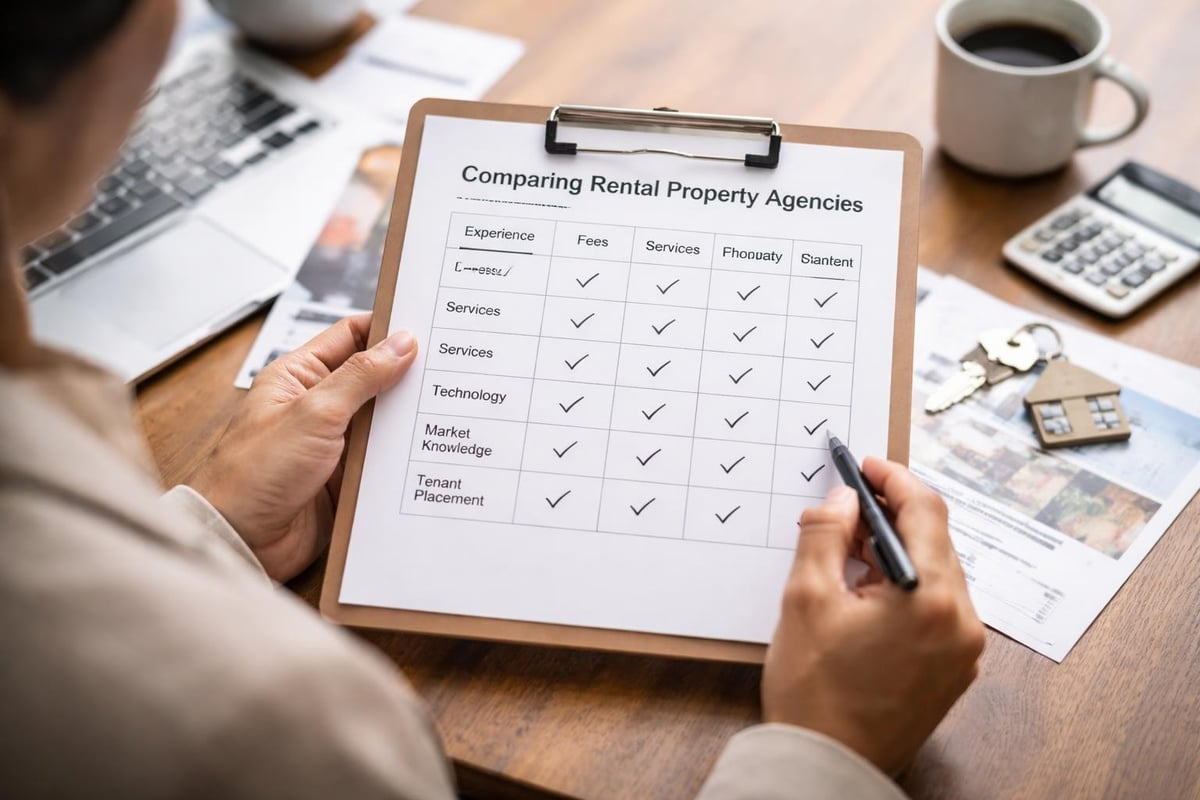
Not all rental property agencies deliver equivalent value or service quality. Property owners must evaluate potential partners carefully, considering both tangible capabilities and cultural fit with their investment philosophy.
Start by verifying credentials and experience in your specific market. Agencies with decades of local experience understand neighborhood nuances that newer firms miss. They have established relationships with contractors, attorneys, and other service providers that streamline operations.
Essential Evaluation Criteria
When interviewing potential agencies, ask detailed questions about their processes, technology platforms, and communication practices. Request references from current clients with similar property types and ownership goals.
- Verify licensing and insurance coverage to protect against liability
- Review their tenant screening process including credit, criminal, and eviction checks
- Examine fee structures to understand total costs beyond base management fees
- Assess their maintenance network and emergency response capabilities
- Evaluate their technology platform for owner portals and financial reporting
- Confirm their legal resources for lease preparation and eviction processing
The quality of tenant screening services directly impacts long-term profitability by reducing turnover and minimizing payment defaults. Agencies using comprehensive screening criteria typically maintain occupancy rates 15-20% higher than those with minimal vetting.
Fee Structures and Cost Considerations
Rental property agencies typically charge management fees ranging from 8-12% of collected rent, with variations based on property type, location, and service scope. Some agencies charge flat monthly fees, while others use percentage-based models that align their success with rental income.
Additional fees often apply for specific services beyond basic management. Leasing fees (typically 50-100% of first month's rent), maintenance markups, renewal fees, and inspection charges can significantly impact total costs. Request complete fee schedules during initial consultations to avoid surprises.
| Fee Type | Typical Range | When Charged |
|---|---|---|
| Monthly Management | 8-12% of rent | Monthly |
| Leasing/Placement | 50-100% first month | Per new tenant |
| Maintenance Markup | 10-20% on repairs | Per service call |
| Lease Renewal | $100-$300 flat | Per renewal |
| Inspection Fee | $50-$150 | Move-in/move-out |
Modern Technology in Property Management
The rental property industry has transformed dramatically through technology adoption over the past decade. Leading rental property agencies now leverage sophisticated platforms that streamline operations while improving tenant experiences and owner transparency.
Property management software integrates functions that previously required multiple systems: applicant tracking, online rent payment, maintenance requests, accounting, and document storage. These platforms create efficiency gains that benefit both agencies and property owners.
Digital Tools Transforming Operations
Online portals allow tenants to submit maintenance requests, pay rent, and communicate with management teams 24/7. This accessibility reduces phone calls and emails while creating documented trails of all interactions. Owners access real-time financial reports, inspection photos, and lease documents through similar portals.
Automated rent collection through ACH transfers has become standard practice, virtually eliminating the challenges of check processing and late payments. The streamlined rent collection processes enabled by these systems improve cash flow predictability while reducing administrative costs.
Smart home technology integration represents the next frontier for rental property agencies. Keyless entry systems, smart thermostats, and connected smoke detectors enhance security while reducing operational costs. These features also appeal to tech-savvy tenants willing to pay premium rents.
Market Trends Shaping the Industry
The rental property market continues evolving in response to demographic shifts, economic conditions, and changing tenant preferences. Understanding these trends helps property owners make strategic decisions about management partnerships and property improvements.
Remote work normalization has fundamentally altered tenant priorities, with home office space and high-speed internet becoming non-negotiable requirements. Rental property agencies that understand these shifts help owners position properties competitively through strategic upgrades and targeted marketing.
Economic Factors Affecting Rental Demand
The real estate and rental industry outlook for 2026 shows sustained demand across most markets, driven by homeownership affordability challenges and demographic trends favoring flexibility. However, regional variations remain significant, with some markets experiencing oversupply while others face severe shortages.
Interest rates directly impact both property values and rental demand. Higher mortgage rates typically drive more potential buyers into rental markets, increasing demand and supporting rate growth. Experienced rental property agencies monitor these indicators to recommend optimal timing for rent adjustments and property acquisitions.

Maintenance Management and Property Preservation
Proactive maintenance management separates exceptional rental property agencies from mediocre ones. Properties under professional management typically maintain higher values and command premium rents because agencies implement systematic inspection and repair schedules.
Deferred maintenance destroys property values while creating tenant dissatisfaction and potential liability. Quality agencies conduct regular inspections, identify emerging issues, and coordinate repairs before minor problems escalate into major expenses.
Preventive Maintenance Programs
Successful rental property agencies maintain networks of licensed contractors who provide responsive service at competitive rates. These relationships ensure reliable emergency response while controlling costs through established pricing agreements.
The effective management tips include creating maintenance schedules for HVAC servicing, gutter cleaning, pest control, and other recurring needs. Agencies that implement these programs reduce emergency repair costs by 30-40% compared to reactive-only maintenance approaches.
Annual property inspections document condition changes over time, providing evidence for security deposit disputes while identifying necessary capital improvements. Professional agencies photograph and document every inspection, creating detailed records that protect owners in legal disputes.
Communication and Reporting Standards
Transparent communication defines the relationship between property owners and rental property agencies. Owners deserve regular updates about property performance, maintenance issues, tenant concerns, and financial results without constantly requesting information.
Monthly financial statements should detail all income and expenses with supporting documentation for every transaction. These reports enable owners to track performance, prepare tax returns, and make informed decisions about property improvements or sales.
Owner Portal Access and Transparency
Modern agencies provide 24/7 portal access where owners review current rent rolls, pending maintenance requests, upcoming lease expirations, and year-to-date financial performance. This transparency builds trust while reducing time spent on status update calls.
Regular property inspections with photographic documentation give distant owners peace of mind about property conditions. Quarterly or semi-annual reports summarizing market conditions, occupancy trends, and recommended improvements help owners maximize long-term returns.
Regulatory Compliance and Fair Housing
Navigating the complex web of rental property regulations requires constant attention and specialized knowledge. Rental property agencies assume responsibility for compliance with fair housing laws, local ordinances, safety codes, and environmental regulations.
Fair housing violations carry severe penalties including substantial fines and legal fees. The critical compliance considerations encompass advertising practices, screening criteria, lease terms, and maintenance response times. Professional agencies implement standardized procedures that treat all applicants and tenants consistently.
Local Ordinance Management
Municipalities nationwide continue implementing rental registration requirements, inspection mandates, and tenant protection ordinances. Agencies operating in specific markets maintain expertise in local requirements that out-of-area owners cannot efficiently track.
Lease agreements must incorporate required disclosures about lead paint, mold, pest control, and other potential hazards. Agencies regularly update lease templates to reflect changing legal requirements, protecting owners from liability arising from outdated or non-compliant documents.
Building Long-Term Success Through Partnership
The relationship between property owners and rental property agencies should function as a strategic partnership rather than a simple vendor arrangement. Owners who actively engage with their management teams, provide necessary resources, and maintain realistic expectations achieve superior results.
Regular communication about property goals, acceptable vacancy periods, maintenance budgets, and tenant qualification standards aligns agency efforts with owner objectives. This collaboration enables agencies to make day-to-day decisions confidently within established parameters.
Properties managed continuously by the same agency for multiple years consistently outperform those experiencing frequent management changes. Stability allows agencies to develop property-specific expertise, maintain contractor relationships, and build tenant goodwill that reduces turnover.
Successful rental property ownership requires expertise, systems, and dedication that professional agencies provide efficiently and cost-effectively. The right management partner transforms property ownership from a demanding second job into a truly passive investment generating consistent returns. Coxe Property Management and Leasing brings over 40 years of Greater New Orleans market experience to property owners seeking hassle-free management backed by proven systems and personalized service. With nearly $1 billion in assets under management, our team delivers the expertise and dedication your investment deserves.