

Property owners and managers increasingly encounter opportunities to rent property to company entities rather than individual tenants. This arrangement presents unique advantages and challenges that require careful consideration. Whether you're managing a single investment property or overseeing multiple units in the Greater New Orleans area, understanding the nuances of corporate leasing can significantly impact your rental business's success. Corporate tenants often offer stability, professional relationships, and potentially higher rental income, but they also demand specialized lease structures, thorough vetting processes, and different management approaches than traditional residential tenants.
Understanding Corporate Tenancy Fundamentals
When you rent property to company tenants, you're entering into a business-to-business relationship that differs substantially from traditional landlord-tenant arrangements. Corporate leases typically involve companies securing housing for relocated employees, establishing local offices, or providing temporary accommodations for project teams.
Types of Corporate Rental Arrangements
Employee Housing Programs represent the most common scenario where businesses lease residential properties for staff members. These arrangements might include:
- Relocated executives requiring temporary or long-term housing
- International employees on extended assignments
- Project teams working on multi-month contracts
- New hires during transitional periods
Office Space Conversions allow companies to lease residential properties and convert them for business purposes, subject to zoning regulations. Corporate Apartments serve as fully furnished units that companies rent for rotating staff members or visiting clients.
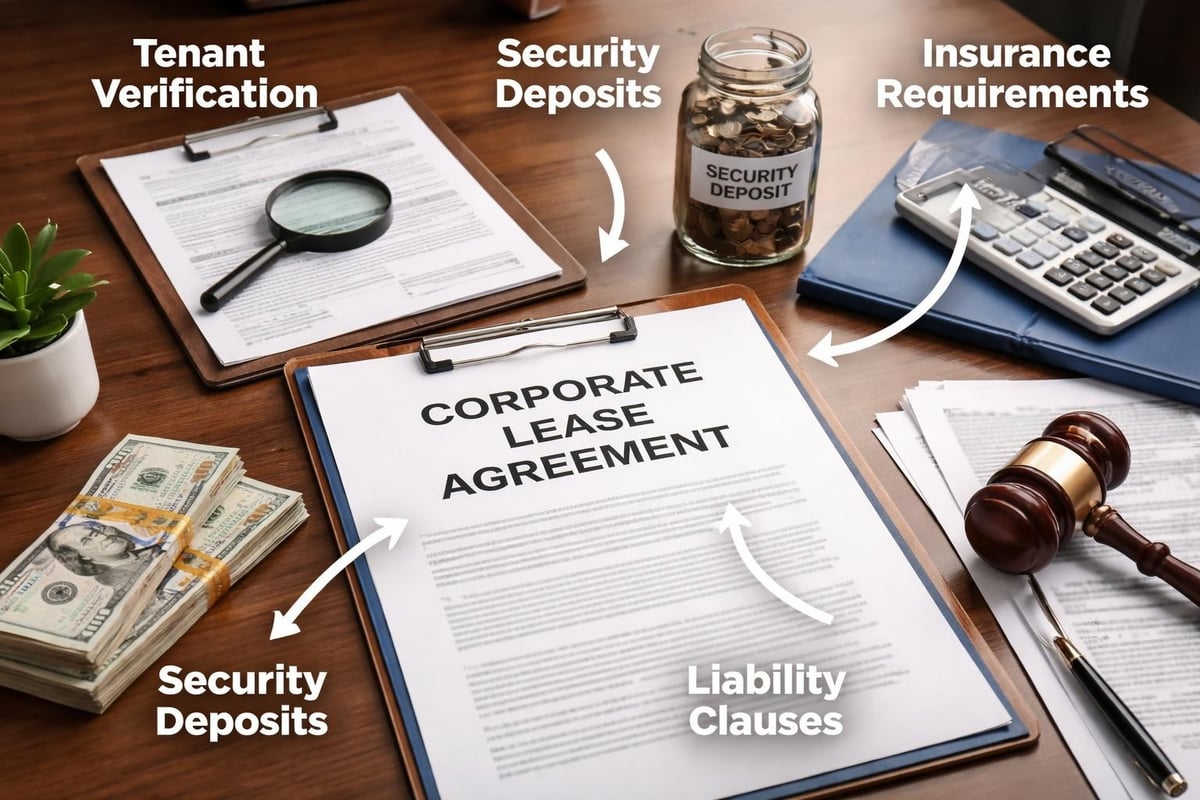
The financial stability of corporate tenants often exceeds that of individual renters. However, verifying a corporation’s legal status and financial health remains critical before finalizing any agreement.
Legal Considerations and Documentation
Legal frameworks governing corporate rentals require meticulous attention to detail. When you rent property to company entities, standard residential lease agreements often prove inadequate for protecting both parties' interests.
Essential Contract Elements
| Lease Component | Individual Tenant | Corporate Tenant |
|---|---|---|
| Lease Duration | 6-12 months typical | 12-36 months common |
| Security Deposit | 1-2 months rent | 2-3 months rent |
| Liability Coverage | Renter's insurance | Commercial liability policy |
| Maintenance Responsibility | Tenant handles minor repairs | Negotiable based on property type |
Professional property managers understand that comprehensive tenant screening becomes even more crucial with corporate clients. The screening process must verify the company's legal standing, financial solvency, and authorization of the signing parties.
Corporate Authorization and Signatures
Companies operate through authorized representatives, making it essential to confirm that signatories possess the legal authority to bind the corporation. Request corporate resolutions or board authorizations demonstrating that the signing party can execute lease agreements on the company's behalf.
Documentation requirements include:
- Articles of incorporation or business registration certificates
- Tax identification numbers
- Proof of good standing with the state
- Board resolutions authorizing the lease
- Financial statements demonstrating ability to pay rent
These documents protect property owners from situations where unauthorized employees sign leases the company later disavows. When dealing with property management in New Orleans, local business registry verification becomes straightforward through Louisiana Secretary of State resources.
Financial Advantages of Corporate Leasing
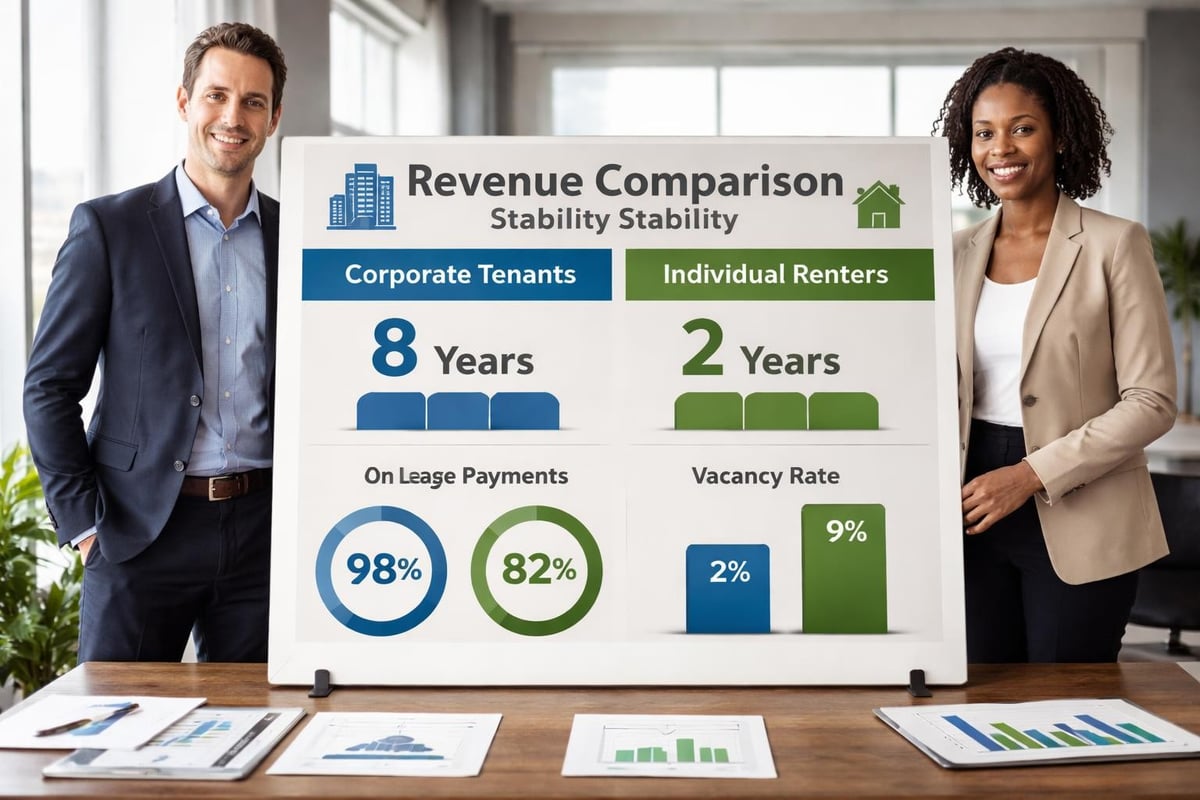
The decision to rent property to company tenants often brings compelling financial benefits that individual tenancies cannot match. Corporate arrangements typically involve longer lease terms, reducing vacancy periods and turnover costs.
Rent Stability and Premium Pricing
Corporate tenants generally accept market-rate or above-market rents, particularly for furnished properties or units in desirable locations. Companies prioritize employee satisfaction and productivity over negotiating the lowest possible rent, creating opportunities for premium pricing.
Key financial benefits:
- Reduced vacancy rates through longer lease commitments
- Lower turnover costs with multi-year agreements
- Premium rent potential for furnished or executive-level properties
- Reliable payment schedules through automated corporate accounting systems
- Professional maintenance relationships that preserve property value
When property owners rent property to their own businesses, understanding tax implications and self-rental rules becomes essential for maximizing tax advantages while maintaining compliance.
Tax Considerations for Owner-Occupied Business Rentals
Some property owners explore arrangements where they rent property to company entities they own or control. Tax strategies for small business owners who own property require establishing arm's length transactions with fair market value rent to ensure IRS compliance.
The transaction must reflect genuine business purpose and market-rate pricing. Personal use restrictions apply, and mixing personal residence with business rental space triggers complex reporting requirements. Professional guidance ensures compliance while maximizing legitimate tax benefits.
Screening and Vetting Corporate Tenants
Thorough due diligence separates successful corporate leasing arrangements from problematic ones. When you rent property to company tenants, investigating the business's stability and reputation protects your investment.
Financial Verification Process
Credit Analysis extends beyond personal credit checks to encompass corporate credit ratings, payment histories with other vendors, and banking relationships. Dun & Bradstreet reports, bank references, and financial statements provide insight into corporate financial health.
Income Verification for corporations involves reviewing:
- Recent profit and loss statements
- Balance sheets demonstrating adequate liquidity
- Cash flow projections supporting rental obligations
- Trade references from other landlords or vendors
Companies experiencing financial difficulties may seek housing for executives while facing underlying business challenges. Identifying warning signs early prevents future collection problems.
Business Reputation Research
| Research Method | Information Gained | Red Flags |
|---|---|---|
| Online Reviews | Customer satisfaction, business practices | Consistent complaints, legal disputes |
| Better Business Bureau | Complaint history, resolution patterns | Unresolved disputes, pattern issues |
| Industry Associations | Professional standing, certifications | Lack of membership, poor standing |
| Previous Landlord References | Payment history, property care | Late payments, property damage |
The screening rigor applied to corporate tenants should match or exceed that used for individual renters, despite the professional appearance companies present.
Structuring the Corporate Lease Agreement
Corporate lease agreements demand specialized terms addressing the unique aspects of business tenancy. Standard residential forms rarely accommodate corporate needs or protect property owner interests adequately.
Occupancy and Use Provisions
When you rent property to company entities, clearly defining who may occupy the property prevents unauthorized subtenants. Corporate leases should specify:
- Named employees authorized to occupy the premises
- Procedures for employee turnover and replacement occupants
- Guest policies for business visitors or clients
- Restrictions on business activities conducted at the property
- Compliance with residential zoning requirements
Furniture and Equipment Clauses become relevant for furnished corporate rentals. Detailed inventories, condition documentation, and replacement responsibility provisions protect both parties. Regular inspections ensure proper maintenance and identify issues before they escalate.
Insurance and Liability Requirements
Corporate tenants require comprehensive insurance coverage exceeding standard renter's policies. Commercial general liability insurance with adequate limits protects against business-related incidents occurring on the premises.
Minimum insurance requirements typically include:
- Commercial general liability coverage ($1-2 million minimum)
- Property damage coverage for landlord's furnishings and fixtures
- Business interruption insurance (for office conversions)
- Workers' compensation if employees regularly work from the property
- Additional insured endorsements naming the property owner
Professional property management services maintain current insurance certificates and monitor policy renewals, ensuring continuous coverage throughout the lease term.
Maintenance and Property Management Responsibilities
Corporate tenants often expect different service levels than individual renters, creating opportunities for property managers to demonstrate professional expertise. When you rent property to company tenants, maintenance response times and quality become critical to relationship success.
Service Level Expectations
Preventive Maintenance schedules should be clearly outlined in lease agreements. Corporate tenants appreciate proactive property care that minimizes disruptions to their business operations or employee comfort.
Professional property managers coordinate:
- Regular HVAC servicing and filter changes
- Landscaping and exterior maintenance schedules
- Pest control services
- Safety equipment inspections (smoke detectors, fire extinguishers)
- Seasonal property preparations
Emergency Response Protocols require 24/7 availability for urgent issues. Corporate tenants expect immediate responses to heating failures, plumbing emergencies, or security concerns affecting employee safety or business operations.

Property Inspection Schedules
| Inspection Type | Frequency | Purpose |
|---|---|---|
| Move-in Documentation | Before occupancy | Establish baseline condition |
| Quarterly Walk-throughs | Every 3 months | Identify maintenance needs early |
| Annual Comprehensive Review | Yearly | Assess major systems, plan capital improvements |
| Move-out Assessment | End of tenancy | Document final condition, determine deposit return |
Regular inspections maintain property value while demonstrating professional management to corporate clients. For properties in the Greater New Orleans area, expert property leasing services understand local climate challenges and maintenance requirements unique to the region.
Negotiating Terms with Corporate Tenants
Corporate lease negotiations differ substantially from individual tenant discussions. Companies often employ real estate professionals or legal counsel who scrutinize lease terms and negotiate favorable conditions.
Common Negotiation Points
Lease Duration represents a primary negotiation area. Corporations prefer flexibility through shorter initial terms with multiple renewal options, while property owners benefit from longer commitments reducing vacancy risk. Finding middle ground often involves:
- Two-year initial terms with one-year renewal options
- Early termination clauses with adequate notice periods (90-120 days)
- Penalty structures for breaking leases early
- Right of first refusal for lease extensions
Rent Escalation Clauses protect property owners against inflation and rising operating costs. Corporate leases commonly include annual rent increases based on Consumer Price Index adjustments, fixed percentage increases, or market rate reviews.
Improvement and Modification Allowances
Companies may request property modifications accommodating specific business needs or employee preferences. Leasing commercial property involves understanding how improvements affect property value and lease terms.
Tenant improvement considerations include:
- Who funds the modifications (landlord allowance vs. tenant expense)
- Ownership of improvements at lease termination
- Required approvals for alterations
- Restoration obligations when vacating
- Impact on security deposits or rent rates
Clear agreements prevent disputes when corporate tenants vacate and questions arise about removing improvements or restoring original conditions.
Managing Multiple Corporate Properties
Property owners who successfully rent property to company tenants often expand their corporate rental portfolios. Scaling corporate leasing operations requires systems and expertise that professional property management provides.
Portfolio Diversification Benefits
Industry Diversification reduces risk by leasing to companies across different sectors. Economic downturns affecting one industry won't impact the entire rental portfolio when tenants represent healthcare, technology, professional services, and other sectors.
Geographic Distribution within a market like Greater New Orleans spreads risk across neighborhoods with varying demand drivers. Properties near medical districts attract healthcare companies, while downtown locations appeal to professional services firms.
Operational Efficiency Through Professional Management
Managing corporate rentals demands expertise in commercial lease structures, corporate verification processes, and business-oriented service delivery. Comprehensive property management services provide the infrastructure supporting successful corporate leasing programs.
Professional managers handle:
- Corporate tenant prospecting and marketing
- Financial verification and legal compliance
- Lease negotiation and documentation
- Ongoing relationship management
- Maintenance coordination and quality control
- Financial reporting and rent collection
For property owners managing portfolios approaching significant asset values, partnering with established property management firms brings decades of experience and proven systems to corporate leasing operations.
Risk Mitigation Strategies
Despite their advantages, corporate rentals carry unique risks requiring proactive management. When you rent property to company entities, understanding potential complications allows for preventive strategies.
Business Failure and Bankruptcy Protection
Corporate financial distress occurs even with thorough screening. Lease agreements should include provisions addressing:
- Personal guarantees from company principals
- Security deposits adequate for multiple months' rent
- Subordination agreements if the property is mortgaged
- Acceleration clauses triggering full lease obligations
- Clear procedures for lease assumption in bankruptcy proceedings
Understanding legal protections for landlords becomes especially important when dealing with corporate tenants whose bankruptcy proceedings may complicate eviction and collection efforts.
Employee Turnover Complications
When companies place employees in rental properties, personnel changes create transition challenges. Lease agreements must address:
- Notification requirements when replacing occupying employees
- Screening standards for replacement tenants
- Overlap periods during employee transitions
- Final responsibility for property condition regardless of employee changes
- Move-out procedures when positions are eliminated
Clear policies prevent situations where departing employees damage property or companies disclaim responsibility for outgoing staff members' actions.
Successfully navigating corporate rentals requires understanding legal requirements, implementing thorough screening processes, and maintaining professional property management standards. Whether you're exploring opportunities to rent property to company tenants for the first time or expanding an existing corporate leasing portfolio, expert guidance ensures profitable, compliant operations. With over 40 years of experience managing nearly $1 billion in assets across the Greater New Orleans area, Coxe Property Management and Leasing provides the expertise and personalized service needed to maximize returns from corporate rental properties while minimizing risks and operational headaches.